
Spindle Cappers UK for Screw Caps, Pumps and Trigger Sprayers
Compare automatic inline spindle cappers, semi-automatic screw cappers, compact desktop cappers, trigger sprayer cappers and cap feeding systems supplied with Lancing UK project support.
- Automatic and semi-automatic options
- Torque, cap feed and bottle handling advice
- UK specification and aftercare support
Built around the closure
Spindle capping machines selected around the bottle, cap and line speed.
A good capping shortlist is not just about catalogue speed. Bottle stability, cap geometry, thread quality, torque window, cap presentation and operator workflow all affect whether a spindle capper will run cleanly in production.
Lancing UK helps specify capping machinery for start-up batches, compact production cells and automatic lines where screw caps, pumps, trigger sprayers or specialist closures need reliable repeatability.
Popular search routes
Find the right capping machine faster
These pages target the main ways buyers search for screw capping, trigger capping, pump capping and automatic bottle capping machinery.
Machine range
Spindle cappers and capping support equipment
Start with the machine family, then tell us the bottle, cap and target throughput so the configuration can be checked properly.
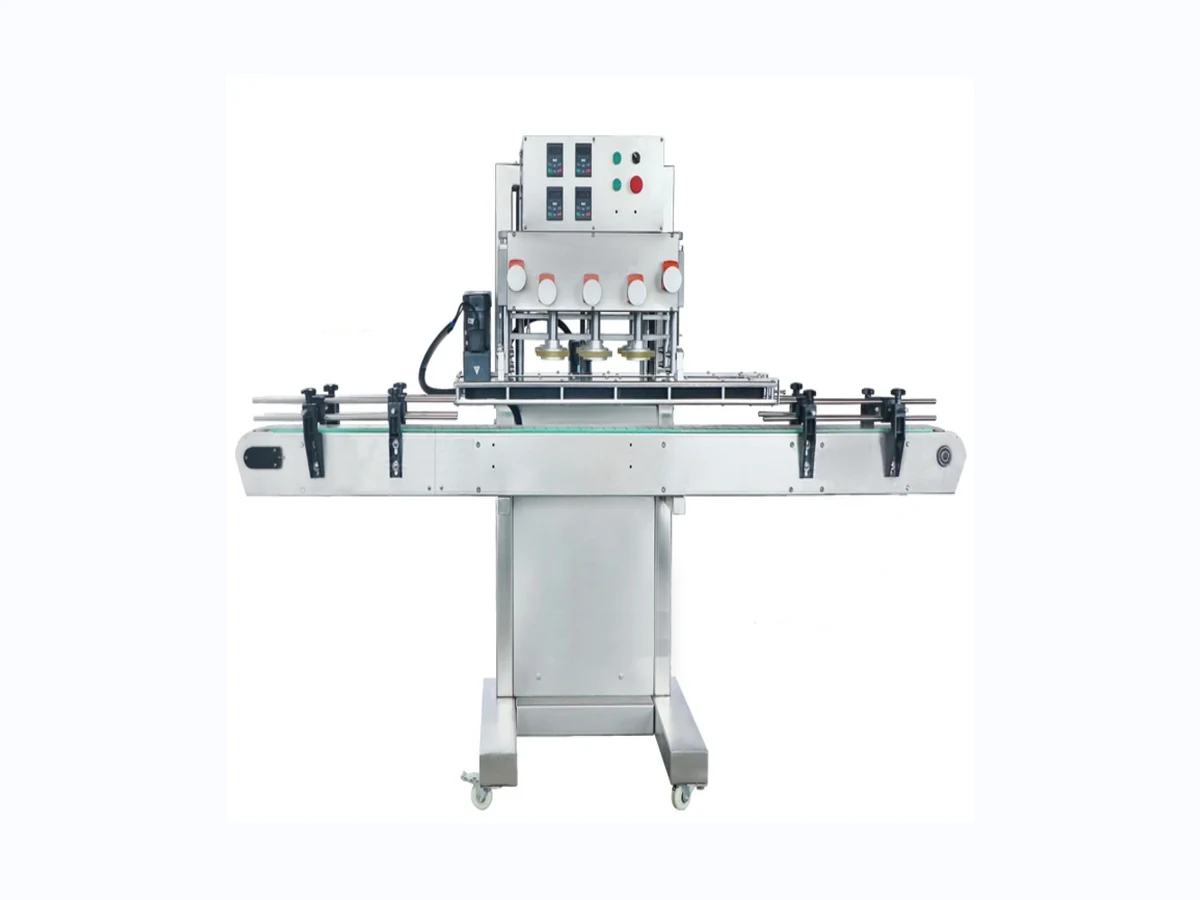
Automatic spindle capper
Automatic Belt Spindle Screw Capping Machine
High-speed inline spindle capper for round plastic bottles, with side-belt handling and optional cap elevator or vibratory bowl feed.
- Output
- 3,000–5,000 bottles/hour
- Cap
- Screw caps, material-dependent
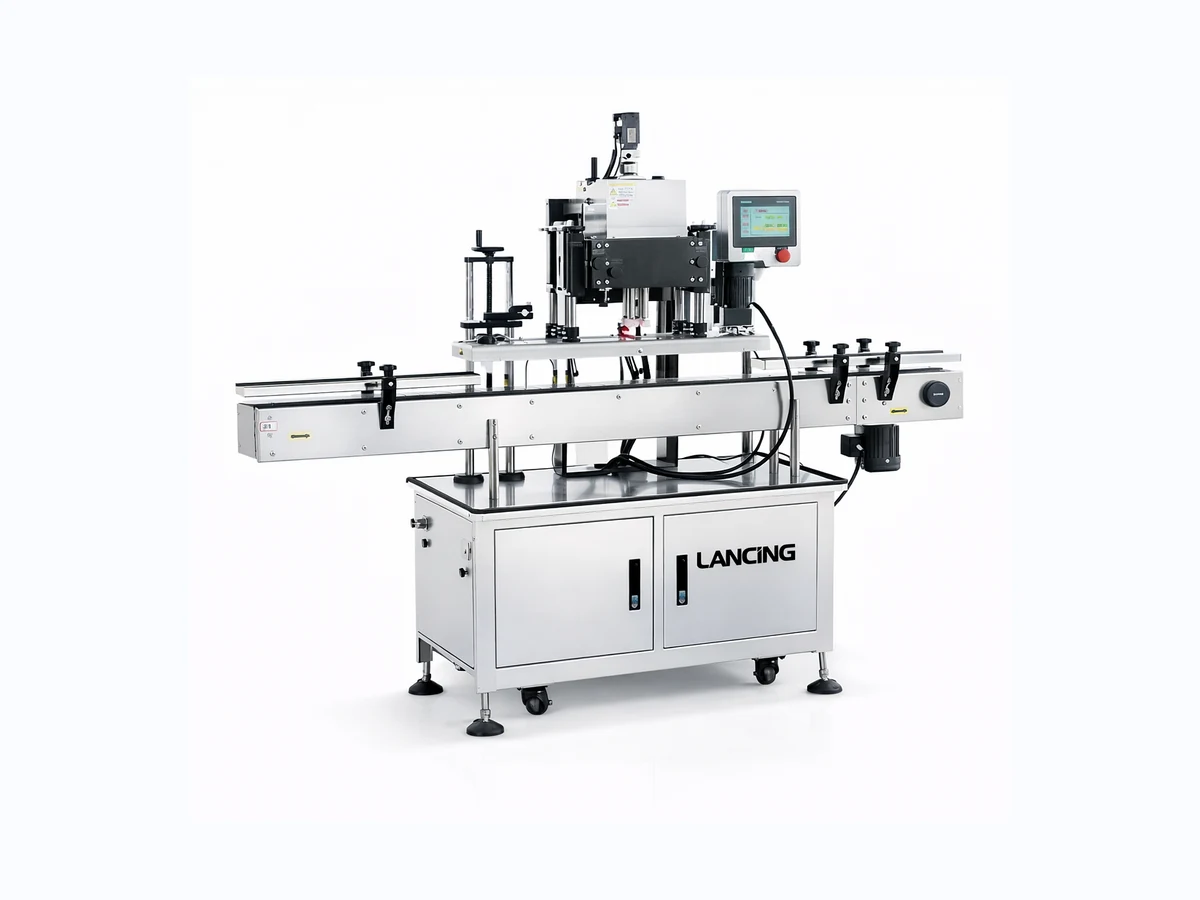
Automatic screw capper
Automatic Screw Capping Machine for Sprays, Pumps and Screw Caps
Pneumatic inline capping machine for sprays, pumps and screw caps where consistent torque, guide control and changeover flexibility matter.
- Output
- 20–60 bottles/min
- Cap
- Cap Ø 18–70 mm
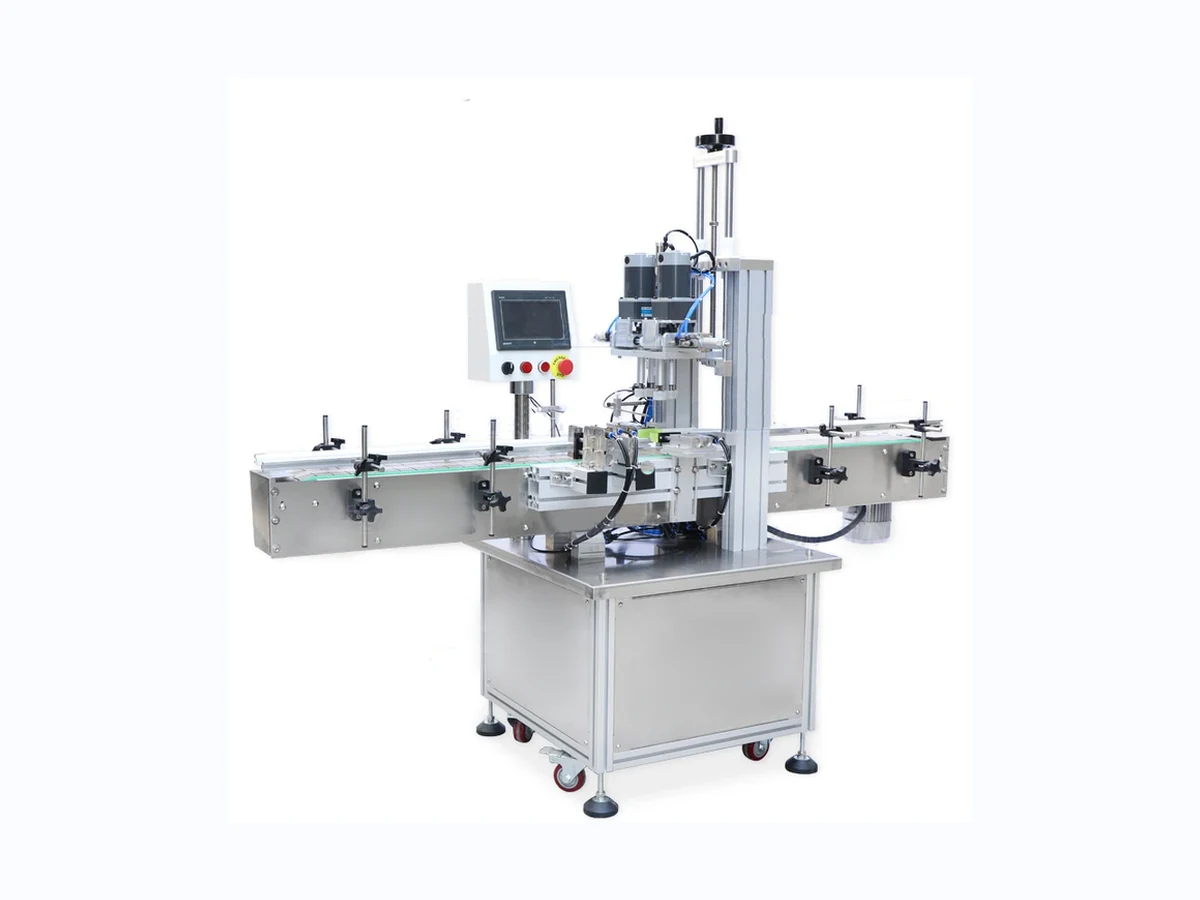
Semi Series
Semi Automatic Screw Capping Machine
Desktop semi-automatic capper with bottle clamping, manual/auto modes and stable torque control for lower-volume production.
- Output
- Typical 20–60 bottles/min
- Cap
- Cap Ø 20–60 mm; up to 90 mm by custom option
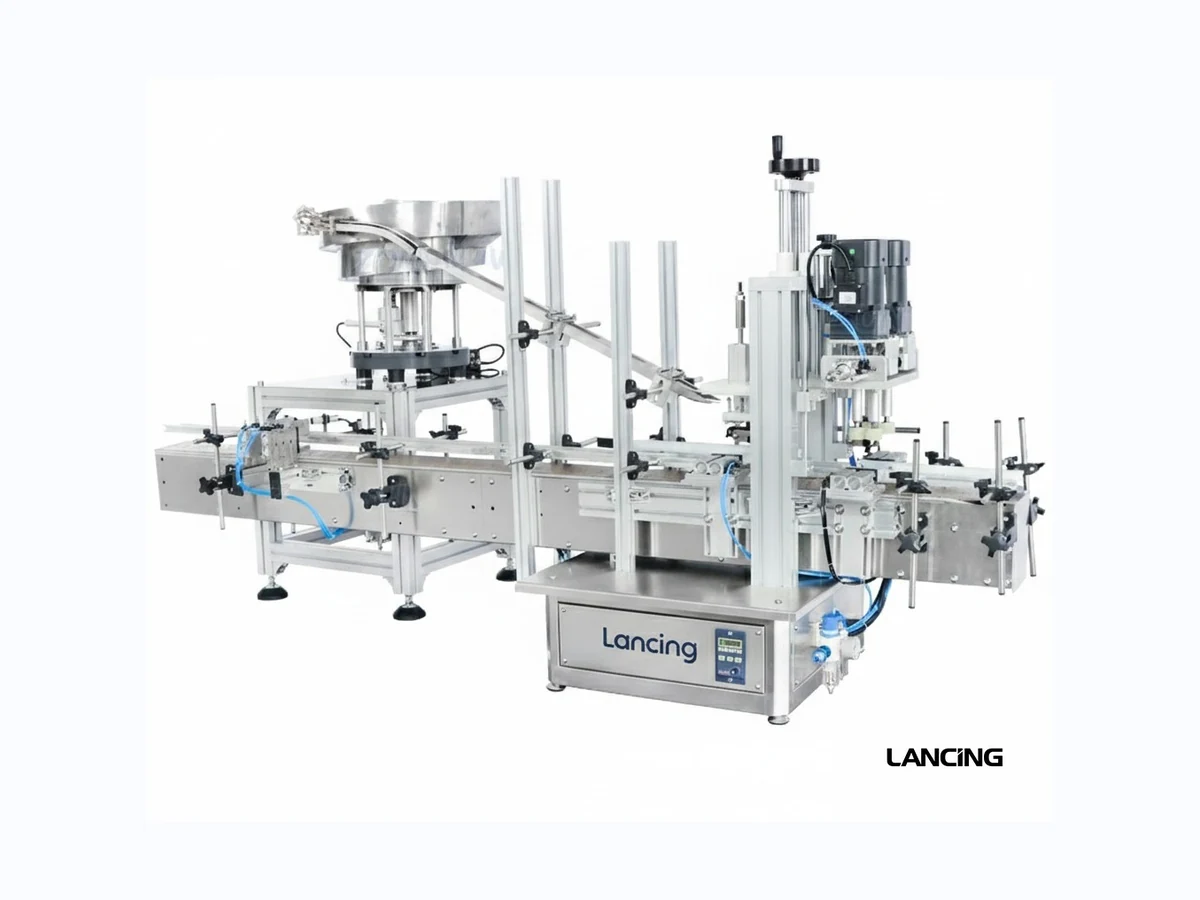
Compact Series
Compact Desktop Screw Capping Machine
Space-saving compact capper for sprays and screw caps, designed for operations that need repeatable torque without a large automatic line.
- Output
- Approx. 20–40 bottles/min
- Cap
- Cap Ø 18–70 mm
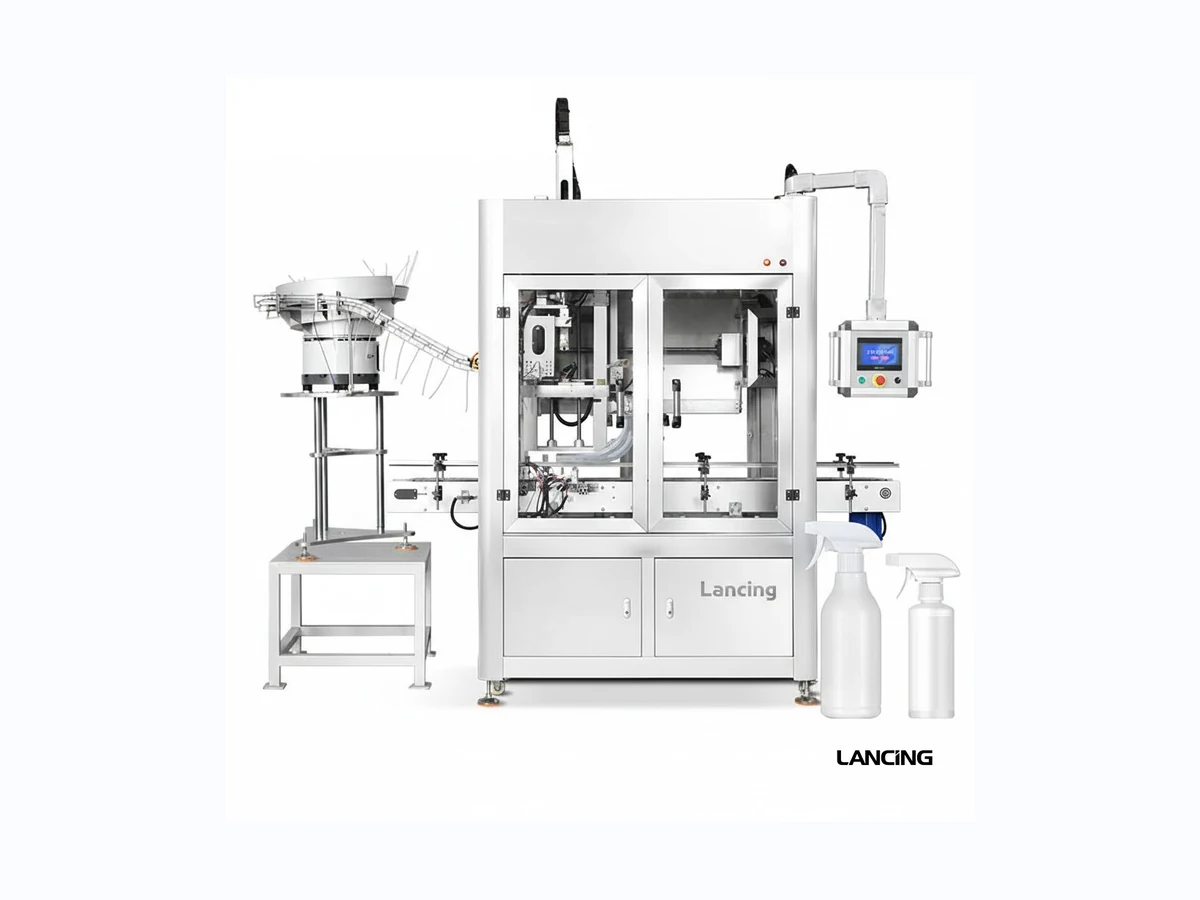
Trigger sprayer capper
Automatic Trigger Sprayer Capper for Cleaning and Care Bottles
Automatic trigger sprayer capping system for bottles where the closure, dip tube and bottle presentation all need to be controlled.
- Output
- 1,200 BPH
- Cap
- Trigger sprayer, customizable
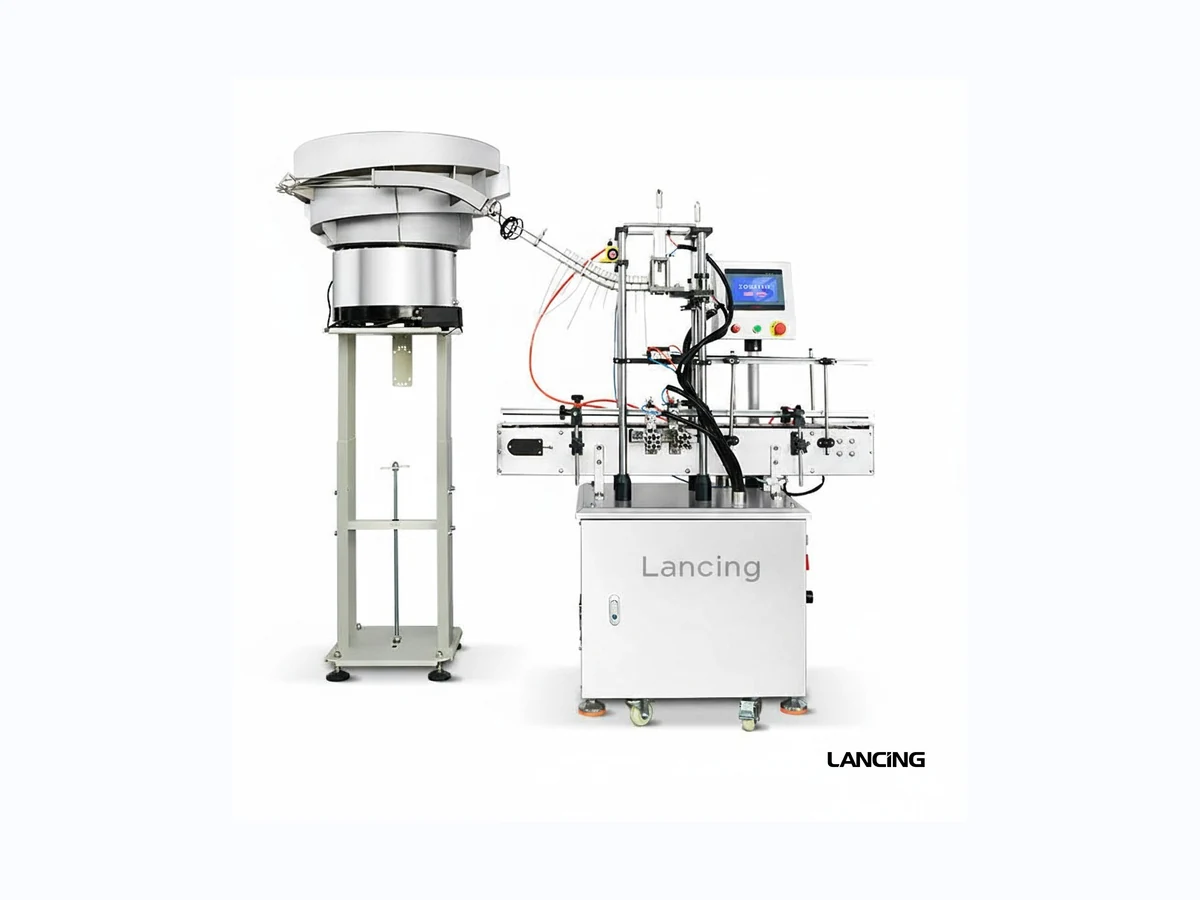
Cap feeding support
Trigger Spray Cap Feeder and Lid Feeding Equipment
Cap feeding equipment for trigger spray caps with soft dip tubes, using vibratory sorting, conveyor handling and pneumatic placement support.
- Output
- 20–25 BPM
- Cap
- Suitable cap size approx. Ø 15–35 mm
Inline automatic capping
Use video and real machine assets to shortlist the right route.
The site includes the supplied Lancing product imagery and capping videos so buyers can see the difference between compact, inline and trigger-sprayer-focused systems.
- Side belts and guides hold bottles through the capping station.
- Spindle wheels or capping heads apply repeatable torque.
- Cap feeding can be manual, elevator-fed, bowl-fed or project-specific.
- Line layout can connect filling, capping, labelling and outfeed handling.
Compare options
Automation levels for spindle capping projects
Semi-automatic
Best for short runs, new products, lab work and lower-volume production where operator loading is acceptable.
Compact automatic
A practical next step when the line needs repeatable torque and better throughput but still has limited space.
Automatic inline
Suited to production lines where consistent capping speed, cap feed and integration with filling and labelling are required.
Specification support
What Lancing UK will usually need before quoting.
The strongest brief includes sample bottles, sample caps, target output, cap torque expectations, line layout and any changeover requirements.
- Bottle diameter, height, material and stability.
- Cap diameter, thread style, liner and torque requirement.
- Cap presentation method: manual, elevator, bowl or custom feed.
- Output target in bottles per minute or bottles per hour.
- Available space, conveyor height and upstream/downstream equipment.
Applications
Common spindle capping applications
Spindle cappers are used across many bottle and closure projects where repeatable tightening matters.
Priority search routes
Find the right capping machine page first
These are the main indexable pages now used to concentrate authority around the strongest buyer searches rather than spreading the site across lots of near-duplicate terms.
Ready to shortlist?
Send the bottle, cap and target output.
Lancing UK will help identify whether you need a semi-automatic capper, compact capper, inline spindle capper or trigger sprayer cap feeding system.
Engineering specification
Specify a spindle capping system around the complete closure process.
An automatic spindle capper does more than turn a screw cap. The system must present the closure cleanly, stabilise the bottle, start the thread without damage, apply the agreed tightening method and release the finished pack without creating a downstream bottleneck.
Problems the equipment is intended to solve
Spindle capping machinery is normally considered when manual tightening or a single-cycle bench process cannot provide the required sustained output. Progressive spindle-wheel contact can tighten a threaded closure while the bottle remains on an inline conveyor. Side or gripper belts help resist bottle rotation, while guides control the pack through the tightening zone.
The machine route still depends on the pack. Flexible sidewalls, tapered containers, tall bottles, labels positioned in the belt-contact area, poor thread engagement and caps that nest or tangle can all change the required configuration. A representative trial is therefore more valuable than selecting equipment from cap diameter alone.
Information Lancing needs for a useful review
- Empty and filled bottle samples, including the least stable format.
- Normal production caps, liners, tamper features and supplier drawings where available.
- Required sustained bottles per minute or bottles per hour, not only a peak target.
- Approved packs or closure-supplier guidance for torque and seal acceptance.
- Cap supply method, available footprint, conveyor height and upstream/downstream equipment.
- Expected SKU range, batch size, changeover frequency and cleaning requirements.
Verified published ranges
Compare models with their stated operating conditions.
The figures below come from the supplied first-party pages. They are starting ranges rather than unconditional performance guarantees; final suitability and sustained output must be confirmed against the real bottle, closure and line.
| Machine route | Published output | Published pack range | Conditions to verify in a trial |
|---|---|---|---|
| Automatic belt spindle capper | 3,000–5,000 bottles/hour | Bottle Ø 35–120 mm; height 60–200 mm; screw caps subject to material | Side-belt grip, spindle-wheel contact, cap start, sustained feed, bottle rotation and closure integrity. |
| Inline automatic screw capper | 20–60 bottles/min | Cap Ø 18–70 mm; bottle Ø 20–160 mm; height 30–300 mm | Pump or trigger presentation, guide control, bottle stability, torque repeatability and changeover settings. |
| Semi-automatic screw capper | Typical 20–60 bottles/min | Cap Ø 20–60 mm; larger caps by configured option | Operator loading, bottle clamp repeatability, chuck or contact fit and the accepted cycle method. |
| Compact desktop screw capper | Approx. 20–40 bottles/min | Cap Ø 18–70 mm; bottle height 60–270 mm | Bench workflow, utilities, bottle support, closure finish and sustainable operator pace. |
| Automatic trigger sprayer capper | 1,200 bottles/hour | Trigger sprayer and bottle size configured to the project | Dip-tube control, trigger orientation, cap handover, bottle support and restart after a feed interruption. |
| LU-XG446S trigger cap feeder | 20–25 bottles/min | Cap approx. Ø 15–35 mm; bottle height approx. 10–280 mm | Bowl sorting, tube straightening, pneumatic placement, jam recovery and interface timing with the capper. |
Trial evidence
Use measurable acceptance checks instead of a catalogue-speed decision.
Cap-feed recovery
Pause or starve the feed route, then record whether the bowl, elevator, chute or placement system returns to stable supply without repeated manual clearing or double feeding.
Bottle stability
Run the lightest, tallest and most flexible filled packs. Check for twisting, tilting, label disturbance, sidewall marking, conveyor hesitation and loss of thread engagement.
Torque and integrity
Compare removal torque and approved pack checks over a defined sample set. Include cross-threading, leakage, liner seating, cap height, visual damage and opening experience.
Jams and restart
Record the cause, detection method, operator access and restart procedure for cap jams, bottle backups and mis-presented closures. A safe, repeatable recovery is part of usable output.
Changeover
Test the smallest and largest formats, record settings and confirm which guides, chucks, wheels, belts or feed tooling must change. Repeatability matters more than a one-off adjustment.
Sustained line output
Measure over a representative run that includes cap replenishment, normal operator tasks and upstream/downstream interaction. Peak cycles alone do not establish production capacity.
Related Lancing resources
Follow the specialist route without creating duplicate search pages.
This site remains focused on inline spindle and belt capping. Use the related specialist resource when the project is mainly about another closure family or feed technology.
Spindle capping machine range
Compare the main Lancing models, automation levels and published operating ranges.
Cap torque test method
Prepare representative samples and practical acceptance checks before a machine trial.
Bottle stability and guiding
Plan side belts, guides and filled-sample checks for unstable containers.
Screw capping specialist site
Use for broader screw-cap, chuck and bench-capper selection outside this spindle-focused resource.
Cap feeder specialist site
Use for detailed bowl, elevator, singulation and cap-orientation projects.
General bottle capping selection
Use for closure families and bottle-capper routes beyond spindle technology.
Buyer questions
Questions to resolve before quotation.
What information is needed to select a spindle capper?
Send bottle and cap samples, filled pack weight, target output, closure type, any torque or leak checks, the proposed cap-feed method and details of the surrounding line.
Does the published machine speed apply to every bottle and cap?
No. Published ranges depend on bottle stability, closure behaviour, cap presentation, changeover settings, operator tasks and upstream or downstream conditions.
How is cap torque agreed for a new project?
Start with closure-supplier guidance and approved hand-capped packs, then validate removal torque, thread engagement, leakage and opening experience using representative production samples.
When is automatic cap feeding required?
Automatic feeding becomes useful when manual placement cannot support the sustained line rate or when consistent cap orientation and operator workload are important.
Can one spindle capper run several formats?
Often, but the practical range depends on bottle dimensions, cap geometry, guide adjustment, spindle-wheel contact and the change parts needed for each format family.
What should be checked during a machine trial?
Record sustained output, cap-feed recovery, cross-threading, bottle movement, torque consistency, cap and bottle damage, changeover time and closure-integrity results.
Specification support
Prepare a sample-led spindle capper enquiry.
Include representative bottle and closure samples, the required output, any known torque or closure-integrity checks, the cap presentation method and photographs of the proposed line area.
Technical planning
Plan the complete spindle-capping process, not only the tightening wheels.
A reliable inline capping project connects bottle stability, cap presentation, pre-threading, progressive tightening, pack-quality evidence and line-stop recovery. These resources help production and engineering teams prepare a stronger brief before machinery selection, sample testing or support.
Build a repeatable format
Record bottle path, guide and gripper-belt settings, cap release and spindle positions against an approved sample.
Use the setup checklistControl cap presentation
Review orientation, chute travel, demand control and the cap's thread-start condition before tightening.
Plan cap presentationDefine acceptable output
Connect seating, torque method, integrity and restart checks to the buyer's pack specification.
Build the quality planBuyer evidence
Questions that connect machine selection with pack evidence
These answers separate the tightening operation from the evidence needed to approve a finished bottle, investigate variation and prepare a dependable enquiry.
What is the difference between tightening a cap and proving the pack is acceptable?
Tightening is the machine action that advances the closure onto the bottle thread. Proving the pack is acceptable also checks thread engagement, cap height, liner or tamper-feature condition, leakage risk, visible damage and the agreed opening result. A spindle capper should therefore be accepted against a defined finished-pack standard, not a torque setting or successful cycle alone.
Why can a proven setup change when a new cap or bottle batch arrives?
A new batch can change stiffness, thread geometry, surface finish, liner behaviour, bottle rigidity or dimensional variation even when the nominal description is unchanged. Those differences can alter cap presentation, bottle grip and removal torque. Compare the new batch with retained approved samples and use the batch-qualification sequence before full production.
When should a capping line include automatic inspection and reject handling?
Automatic inspection becomes useful when a clearly defined fault can be detected reliably at line speed and the rejected bottle can be removed and confirmed without creating another hazard or mix-up. Start with the failure modes that matter, then decide whether presence sensing, height measurement, vision or offline sampling is appropriate. The reject-system guide sets out that sequence.
What records make a spindle-capping problem easier to diagnose?
Record the bottle and cap batch, format settings, guide and belt positions, spindle-wheel setup, feeder conditions, line speed, fault time, affected packs and any intervention. A short cause-coded run log helps distinguish packaging variation, wear, setup drift and upstream disruption. Use the production-run log checklist to make remote support evidence more useful.
More buyer answers
Questions that help shortlist a spindle capper
These added answer routes help buyers move from a general capping search to the evidence Lancing needs for a useful specification review.
What should be checked if bottles spin during capping?
Check side-belt contact, guide setting, filled bottle stability, cap start and upstream pressure before increasing capping force. Bottle spin is often a handling issue as much as a torque issue.
What samples should be sent before quotation?
Send filled or weighted bottles, the intended caps, the hardest format in the range, target output and any current torque or leak-check evidence. Empty ideal samples can miss the real production risk.
When is automatic cap feeding justified?
Automatic feeding is justified when manual placement cannot support the sustained rate, cap orientation must be controlled, or operator workload causes missed, tilted or inconsistent cap starts.
What should an inline spindle capper trial check?
Provide the bottle and closure range, including pumps or triggers where required. Assess cap presentation, bottle grip and tightening through the complete inline sequence. Agree closing and opening checks, then trial variation in cap seating, line spacing and format changeover before confirming the proposed arrangement.
Related guidance:
Assess spindle capping as a controlled sequence
An inline spindle capper enquiry should show the pack before the tightening zone as well as the finished bottle. Explain how the cap is presented, where the bottle becomes controlled and what happens immediately after closing. This sequence helps distinguish a tightening requirement from a cap-feeding or conveyor-handling problem.
For each bottle and cap combination, provide an approved assembled pack and unassembled production samples. Mark the cap surfaces that can be contacted and the bottle surfaces available for support. If the range includes pumps or triggers, identify those closures separately so their presentation and clearance requirements are reviewed explicitly.
Ask the trial to record acceptable finished bottles rather than only the number passing the machine. Include observations of cap position, visible marks, the agreed torque-related checks and any other pack-release criteria. Keep the inspection method and timing with the results so a later run can be compared on the same basis.
- Entry conditions
- Show bottle spacing, filled condition and cap placement as they occur on the current or proposed line.
- Format evidence
- Request a changeover between representative packs, with tooling and adjustment records linked to each approved sample.
- Line behaviour
- Include ordinary interruptions, closure replenishment and the agreed restart sequence in the assessment of the integrated system.
Can a spindle capper be selected from cap diameter alone?
Diameter is only one input. Supply the cap profile, bottle support details, intended presentation and production samples, then ask for the proposed configuration and demonstrated format limits to be recorded in the quotation.