
Semi Series
Semi Automatic Screw Capping Machine
Desktop semi-automatic capper with bottle clamping, manual/auto modes and stable torque control for lower-volume production.
- Output
- Typical 20–60 bottles/min
- Cap
- Cap Ø 20–60 mm; up to 90 mm by custom option
- Container
- Configured to bottle diameter, height and material
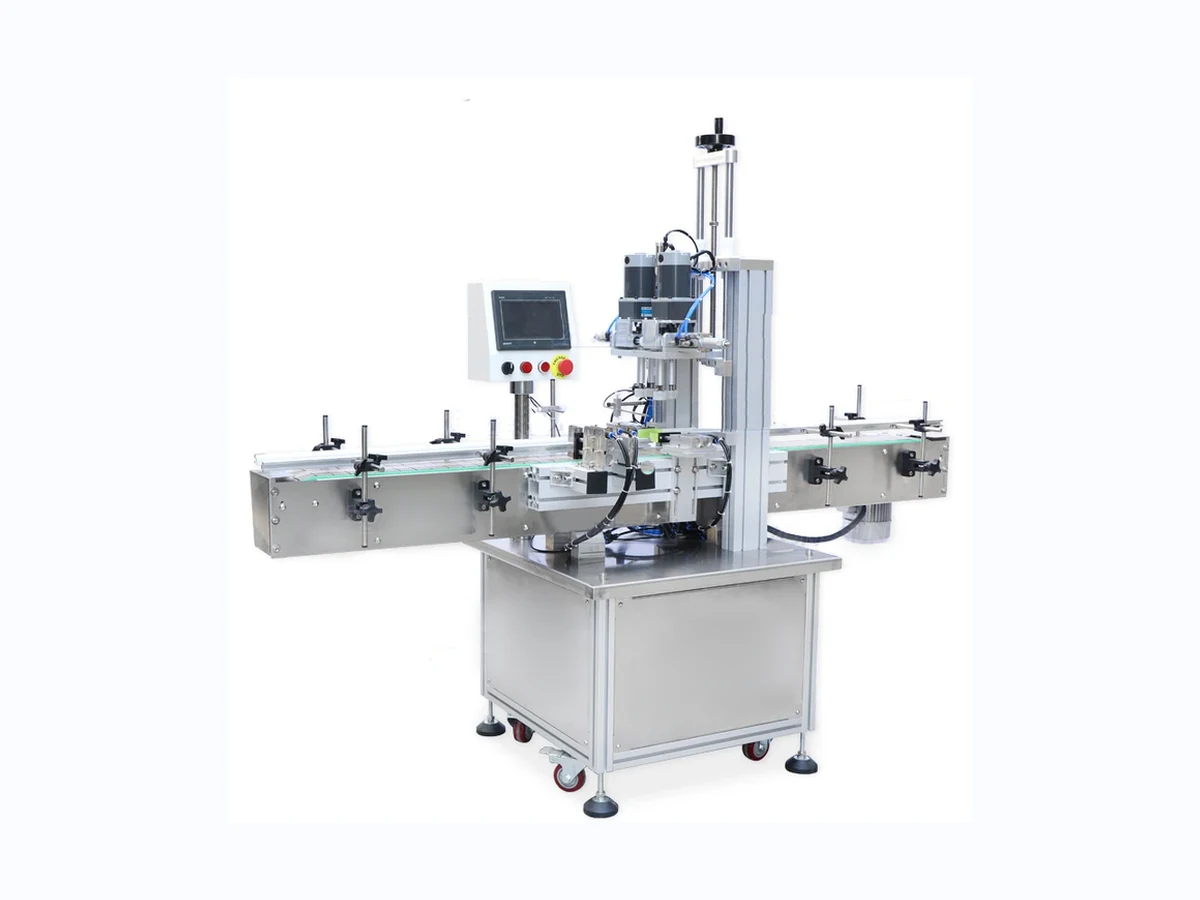
Machine overview
Where this capper fits
Desktop semi-automatic capper with bottle clamping, manual/auto modes and stable torque control for lower-volume production.
- Bottle clamping helps repeatability and reduces operator variation.
- Compact footprint for start-ups, pilots and short production runs.
- Consistent torque control supports a better finished pack.
- Suitable when a full automatic cap feed is not justified.
Technical specifications
| Cap range | 20–60 mm standard; larger caps may be possible by custom option |
|---|---|
| Operation | Semi-automatic with bottle clamping structure |
| Speed | Typically 20–60 bottles/min depending on container and cap |
| Modes | Manual/automatic cycle modes subject to configuration |
| Best suited to | Cream, lotion, toner and similar screw-closure bottles |
See capping in context
Plan the complete capping cell, not only the base machine.
For reliable production, the capping unit should be matched to bottle stability, cap feed, changeover frequency, torque expectation and the wider line layout.
Send your bottle and cap detailsApplications
Typical uses
Enquiry checklist
Information to send for this machine.
The fastest way to confirm suitability is to send clear product, bottle and closure information with the expected output and available line space.
- Photos or samples of the bottle and cap.
- Target output in bottles/min or bottles/hour.
- Cap torque requirement or current acceptable torque range.
- Whether caps will be manually placed or automatically fed.
- Available space, conveyor details and downstream equipment.
Talk to Lancing UK
Check whether this capper is the right fit.
Send the machine name, bottle details, cap details and target output. We will come back with the best route and configuration.
Bench-top capping
Use the semi-automatic capper where controlled tightening matters more than continuous inline automation.
This route is intended for lower-volume production, trials and short batches where an operator can load the bottle and present the cap. Bottle clamping can reduce variation compared with hand tightening, but sustained output still depends on operator workflow and the difficulty of the pack.
Selection and operating method
The supplied description lists manual and automatic cycle modes with a bottle-clamping structure. The cap must be placed correctly before the tightening cycle, so the trial should assess ergonomics, cap start and pack handling as well as the machine cycle itself.
Keep the bottle clamp, cap-contact tooling and height mechanism clean and secure. Format records should include the selected tooling, height, clamp position and cycle mode.
Changeover, maintenance and line integration
The workbench layout should keep uncapped and capped bottles separated, provide safe cap access and avoid awkward reaches that reduce sustainable output.
Where the capper uses compressed air for clamping, confirm the site supply, pressure stability, isolation and hose routing before installation.
Published data and test conditions
Use the stated range as a starting point for sample validation.
Values are retained from the supplied first-party product page. They are not a guarantee for every closure or bottle; the representative production pack and agreed acceptance method determine the final configuration.
| Published output | Typical 20–60 bottles/min, depending on container and cap. |
|---|---|
| Standard cap range | 20–60 mm. |
| Larger cap option | Up to 90 mm may be possible by custom configuration. |
| Bottle control | Automatic bottle-clamping structure. |
| Operating modes | Manual or automatic cycle modes subject to configuration. |
| Typical use | Lower-volume cream, lotion, toner and similar screw-closure bottles. |
Trial and acceptance evidence
Checks that establish usable performance.
Operator cycle
Measure a representative batch including bottle pickup, cap placement, clamping, tightening and removal.
Clamp support
Check the lightest and most flexible bottles for movement, marking or deformation.
Cap contact
Confirm the chuck or contact tooling fits the closure without scuffing or slipping.
Torque acceptance
Compare approved packs over a defined sample set and monitor variation as the operator works through the batch.
Format change
Swap the required tooling and height settings, then confirm first-off quality without lengthy trial-and-error.
Ergonomics
Review reach, cap supply, foot or automatic cycling and repetitive handling over the intended batch size.
When another technology may be more suitable
An automatic inline capper becomes more suitable when manual cap placement, bottle handling or operator labour cannot support the required sustained output. A handheld capper may suit rework or very small batches, while a specialist pump or trigger system may be needed for awkward closures.
Related pages
- Compact screw capper — Compare the next compact automation route.
- Automatic spindle capper — Review continuous inline capping for higher output.
- Automatic versus semi-automatic — Compare labour, output and integration.
- Sample preparation — Prepare representative packs for testing.
- Screw capping specialist — Review broader bench and screw-cap options.
Buyer questions
Questions to resolve before final specification.
Is 20–60 bottles/min realistic for every operator?
No. The page describes a typical range that depends on the pack and workflow. A timed batch trial is needed for sustainable output.
Does bottle clamping replace sample testing?
No. Clamp position and force must suit the bottle without causing movement or damage.
Can it run caps larger than 60 mm?
The supplied page states that caps up to 90 mm may be possible by custom option, subject to confirmation.
How is torque controlled?
The machine is described as supporting stable torque, but the acceptance method should be agreed using the actual bottle, cap and approved finished pack.
What affects changeover time?
Tooling, height, clamp position, cap diameter and the quality of recorded settings all affect changeover.
When should I move to automatic capping?
Consider automatic equipment when operator loading, cap placement or batch size prevents the required sustained output or consistent pack quality.
Specification support
Send representative samples for a configuration review.
Include representative bottle and closure samples, the required output, any known torque or closure-integrity checks, the cap presentation method and photographs of the proposed line area.
Operator-assisted acceptance
Define the manual presentation method as part of the process.
The published standard cap range is 20–60 mm, with larger caps potentially available by custom configuration, and typical output depends on the container, cap and method. Record how the operator locates the bottle, places the cap and starts each cycle.