Bottle control
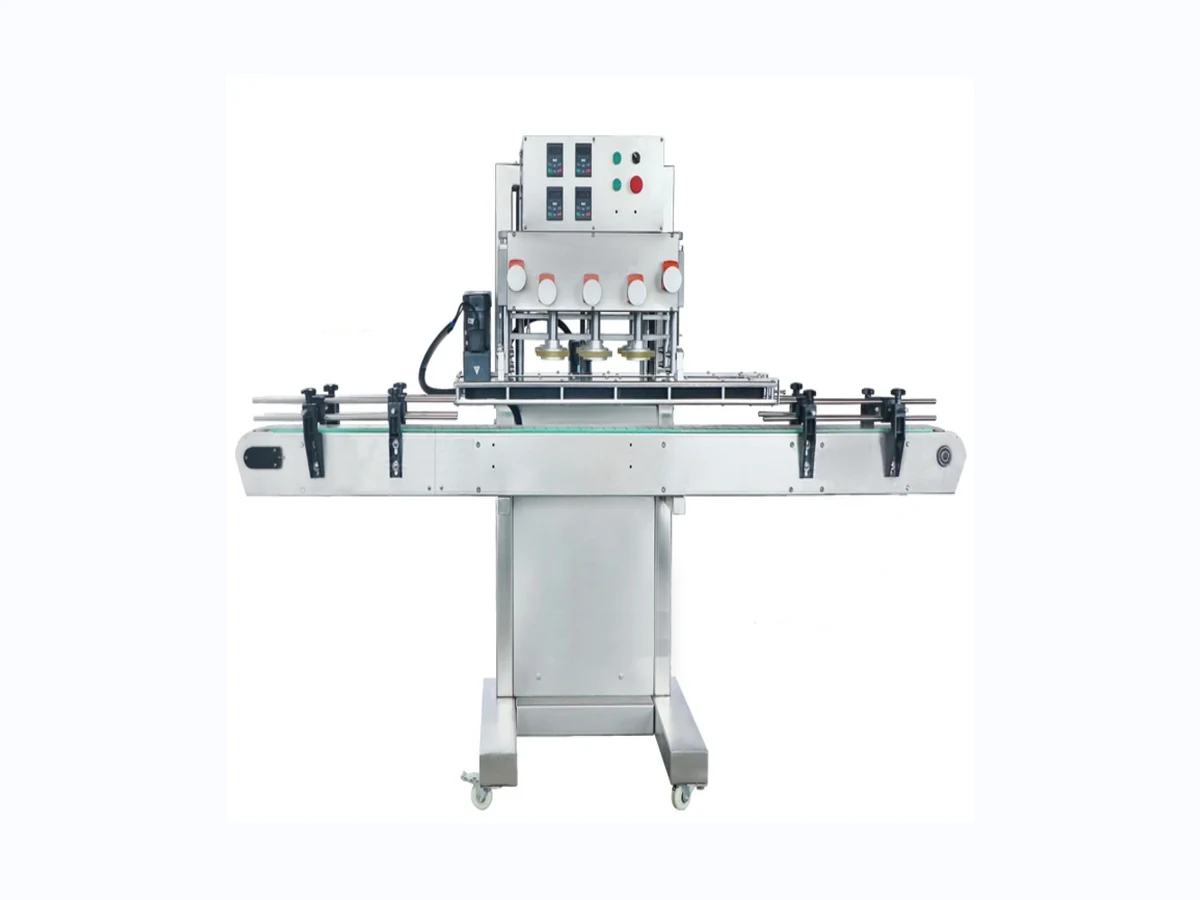
Side belts and guides hold containers through the tightening station so the cap can be applied consistently.

Automatic inline capping
An inline spindle capper is normally the right route when screw capped bottles need repeatable throughput, stable bottle handling and integration with filling, labelling and conveyors. Lancing UK can help compare the bottle, cap, torque target and output requirement before a machine is specified.
Project advice
An inline spindle capper is normally the right route when screw capped bottles need repeatable throughput, stable bottle handling and integration with filling, labelling and conveyors. Lancing UK can help compare the bottle, cap, torque target and output requirement before a machine is specified.
For a reliable recommendation, send bottle dimensions, cap samples, target output, photos of the line area and whether the machine must connect with filling, labelling, coding or conveyors.
Specification notes
The same closure can behave differently depending on bottle stability, thread quality, cap feed route, torque expectation and output target.
Side belts and guides hold containers through the tightening station so the cap can be applied consistently.
Spindle wheels are adjusted around the closure, bottle shape and required tightening result.
Inline machines are used where output is beyond semi-automatic operation and production needs a repeatable flow.
Related searches
These pages strengthen the route from broad capping-machine searches into more specific buying enquiries.
FAQ
It is used to tighten screw caps on bottles as they travel through an automatic production line.
It is mainly suited to threaded screw caps. Pumps, triggers and unusual closures may need additional handling or a different route.
Bottle samples, cap samples, target output, torque expectation and line layout are the key details.
Ready to shortlist?
Lancing UK will help identify the most suitable capping route and what needs to be checked before quotation.
Continuous production
Performance depends on bottle pitch, container stability, cap availability and downstream capacity as well as the tightening mechanism. Specify normal production and the disturbances the line must absorb without uncapped, cross-threaded or damaged packs.
Set guides and gripper belts for the filled bottle.
Orient and release the closure squarely before tightening.
Test low cap supply, blocked discharge and restart.