Screw capping
For standard threaded caps where torque and repeatability are the main requirements.

Application route
Chemical products can introduce compatibility, safety and handling requirements. Capper choice should consider bottle stability, cap feed, materials, operator access and integration with filling.
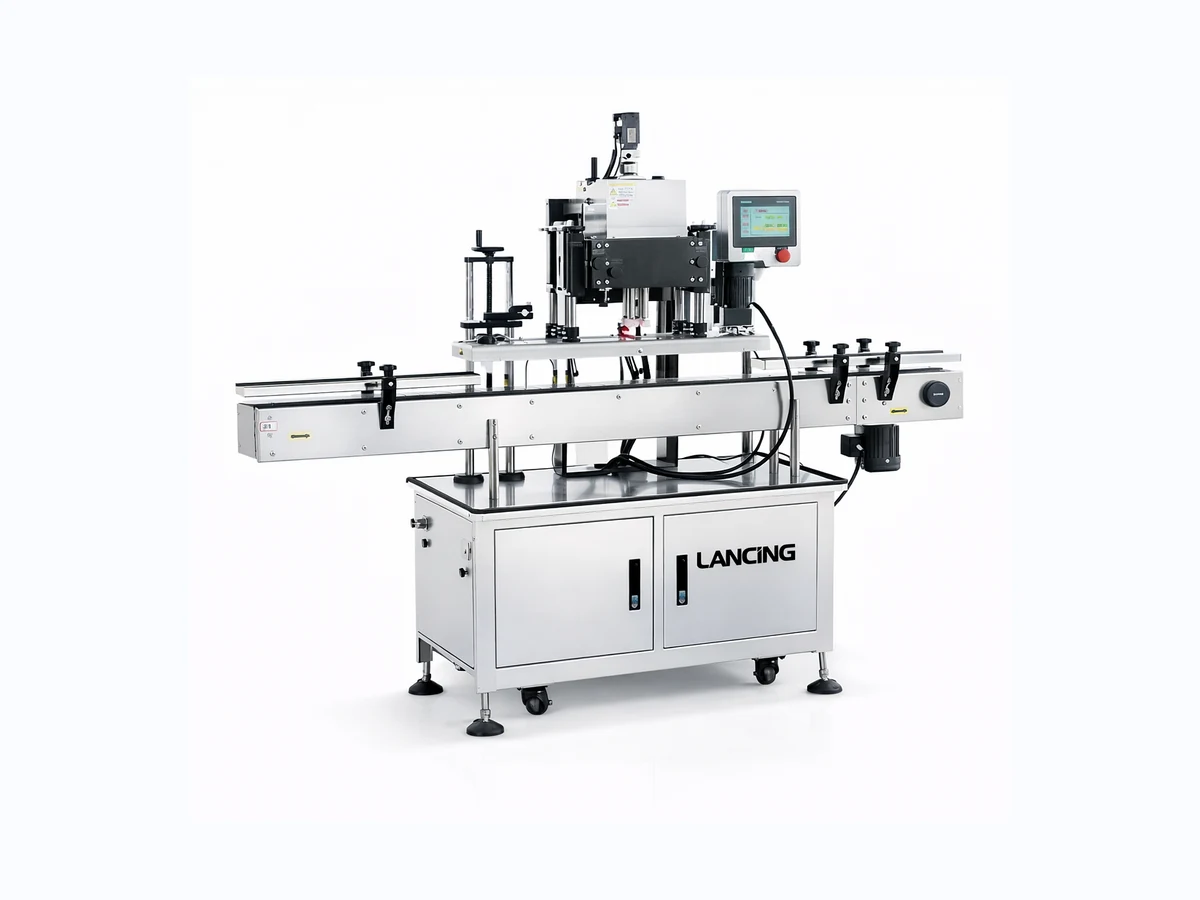
Sector checks
Chemical products can introduce compatibility, safety and handling requirements. Capper choice should consider bottle stability, cap feed, materials, operator access and integration with filling. The most reliable route is to check the actual bottle and cap samples before selecting semi-automatic, compact or automatic inline capping machinery.
Lancing UK can help compare screw capping, spindle capping, trigger capping, pump capping and cap feeding options for this application.
Machine fit
For standard threaded caps where torque and repeatability are the main requirements.
For closures where orientation, dip tubes and presentation need more control.
For automatic lines where manual cap placement becomes a bottleneck.
Related pages
Ready to shortlist?
Lancing UK will help identify the most practical capping route and quote the right machinery scope.
Chemical pack trial
Chemical capping should consider product, bottle, closure, liner and cleaning method together. Filled samples can reveal distortion, contamination, foaming, weight distribution and cap slip that empty-water trials may not represent.
Provide current safety information and identify compatibility needs. The buyer remains responsible for product assessment.
Define residue, drip, reject and cleaning arrangements before intervention.
Agree visual, torque, liner or leak checks and test after normal running and restarts.