Operator-led process
The operator remains part of the cycle, keeping the machinery simple and flexible.

Lower-volume capping
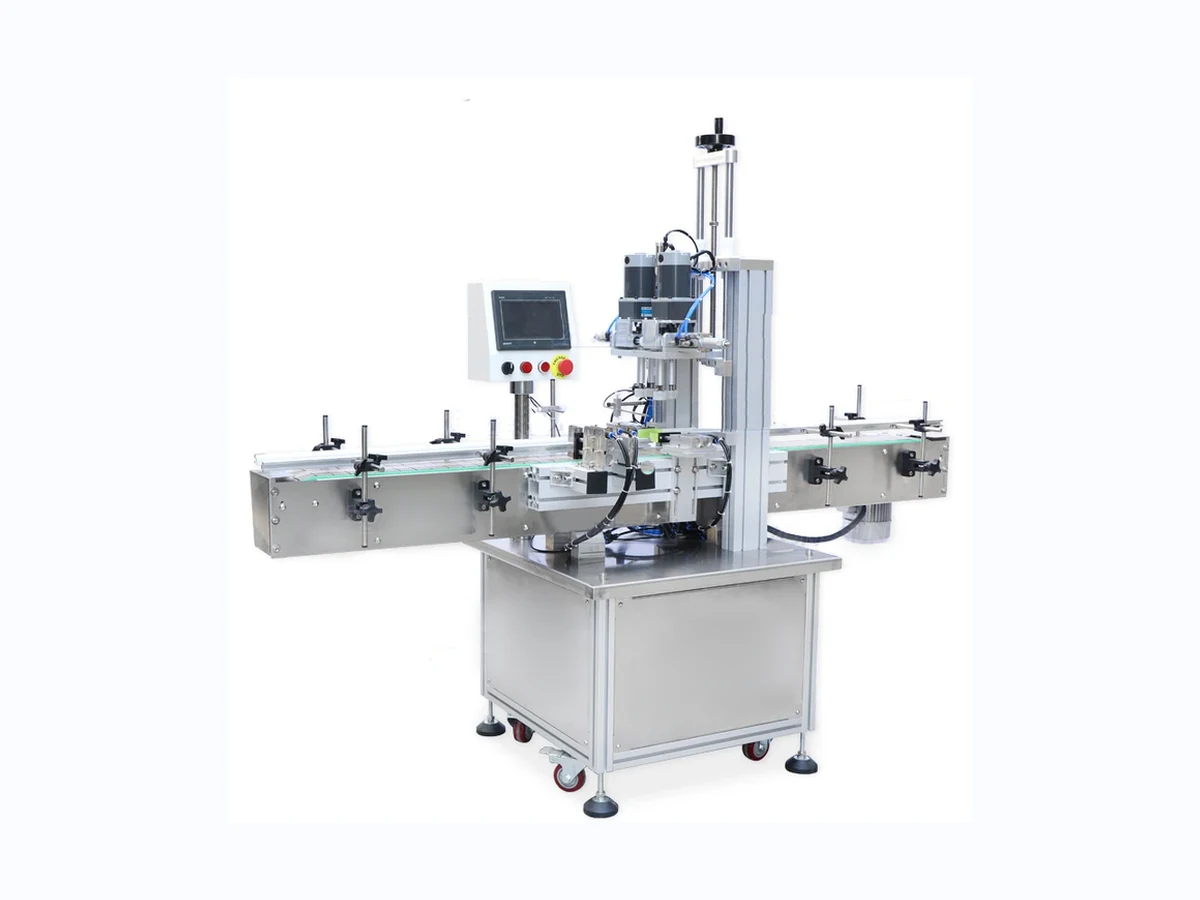
Semi-automatic capping machines are used where the operator places or presents the bottle and closure, then the machine applies controlled tightening. They are useful for short runs, product launches, contract packing, sampling and lower-volume production.
Project advice
Semi-automatic capping machines are used where the operator places or presents the bottle and closure, then the machine applies controlled tightening. They are useful for short runs, product launches, contract packing, sampling and lower-volume production.
For a reliable recommendation, send bottle dimensions, cap samples, target output, photos of the line area and whether the machine must connect with filling, labelling, coding or conveyors.
Specification notes
The same closure can behave differently depending on bottle stability, thread quality, cap feed route, torque expectation and output target.
The operator remains part of the cycle, keeping the machinery simple and flexible.
Semi-automatic equipment can be easier to adapt for changing products and closures.
It is often the entry point before moving to automatic capping machinery.
Related searches
These pages strengthen the route from broad capping-machine searches into more specific buying enquiries.
FAQ
It is best for lower output, limited budgets, short runs or frequent product changes.
Some trigger and pump closures can be handled, but the closure shape and dip tube need checking.
Many businesses start semi-automatic and move to inline automatic capping once output grows.
Ready to shortlist?
Lancing UK will help identify the most suitable capping route and what needs to be checked before quotation.