Cap start and thread engagement
The cap must sit correctly before tightening begins. Thread quality, cap height and liner design affect how reliably the cap starts.

Screw cap machinery
Compare semi-automatic, compact and automatic screw capping machines for bottles, jars, pumps, triggers and standard threaded screw caps.
Buyer route
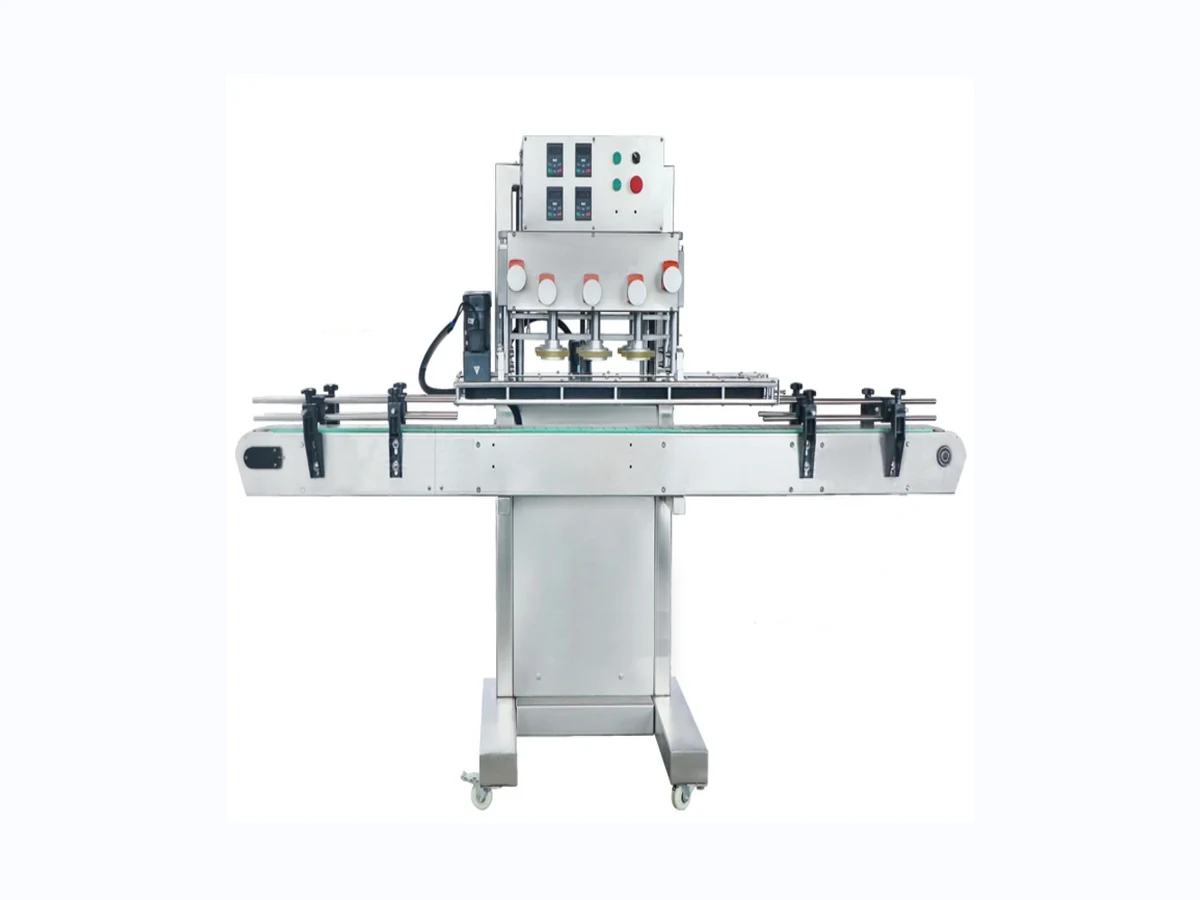
The right screw capping machine depends on the cap thread, cap diameter, closure height, liner, bottle shape and the amount of operator involvement the line can accept. A low-volume project may only need a semi-automatic torque head, while a production bottle line may need side belts, guides, cap feed, cap pickup and a repeatable inline spindle capping station.
Lancing UK can help compare the practical route before you commit to a machine specification. The most useful starting point is a sample bottle and cap, target output in bottles per minute or bottles per hour, and a clear description of how filling, labelling and outfeed will connect.
Machine comparison
This comparison helps buyers avoid treating every capping machine as the same product.
| Route | Typical output | Cap / closure | Best project fit |
|---|---|---|---|
| Semi-automatic screw capper | Lower to mid volume, operator-fed | Standard threaded screw caps | Short runs, test batches and controlled torque without a full automatic line. |
| Compact desktop capper | Mid volume, limited footprint | Screw caps, sprays and some pumps | Sites that need repeatable tightening but do not have room for a long conveyor system. |
| Automatic inline spindle capper | Higher continuous output | Threaded screw caps on stable bottles | Production lines where side belts, guides and spindle wheels apply repeatable torque. |
| Trigger or pump capper | Project-specific | Trigger sprayers, pumps and closures with dip tubes | Cleaning, home-care, cosmetics and personal-care lines where closure orientation matters. |
Specification checks
Small details can decide whether a machine tightens cleanly or creates cross-threading, stoppages and torque variation.
The cap must sit correctly before tightening begins. Thread quality, cap height and liner design affect how reliably the cap starts.
Lightweight, tall or shaped bottles may need side belts, custom guides or additional handling before repeatable capping is possible.
Cap size range, SKU changes and operator workload determine whether manual placement, an elevator, a chute or a bowl feeder is practical.
Related pages
FAQ
A screw capping machine tightens threaded closures onto bottles or containers using a controlled chuck, spindle wheels or torque head.
Higher-output projects usually need an inline spindle capper with side-belt handling, cap presentation and integration with conveyors.
Some flexible inline capping routes can support more than one closure family, but samples must be checked because pumps and trigger sprayers create different handling issues.
Ready to shortlist?
Lancing UK will help identify the most practical capping route and quote the right machinery scope.