Automatic flow
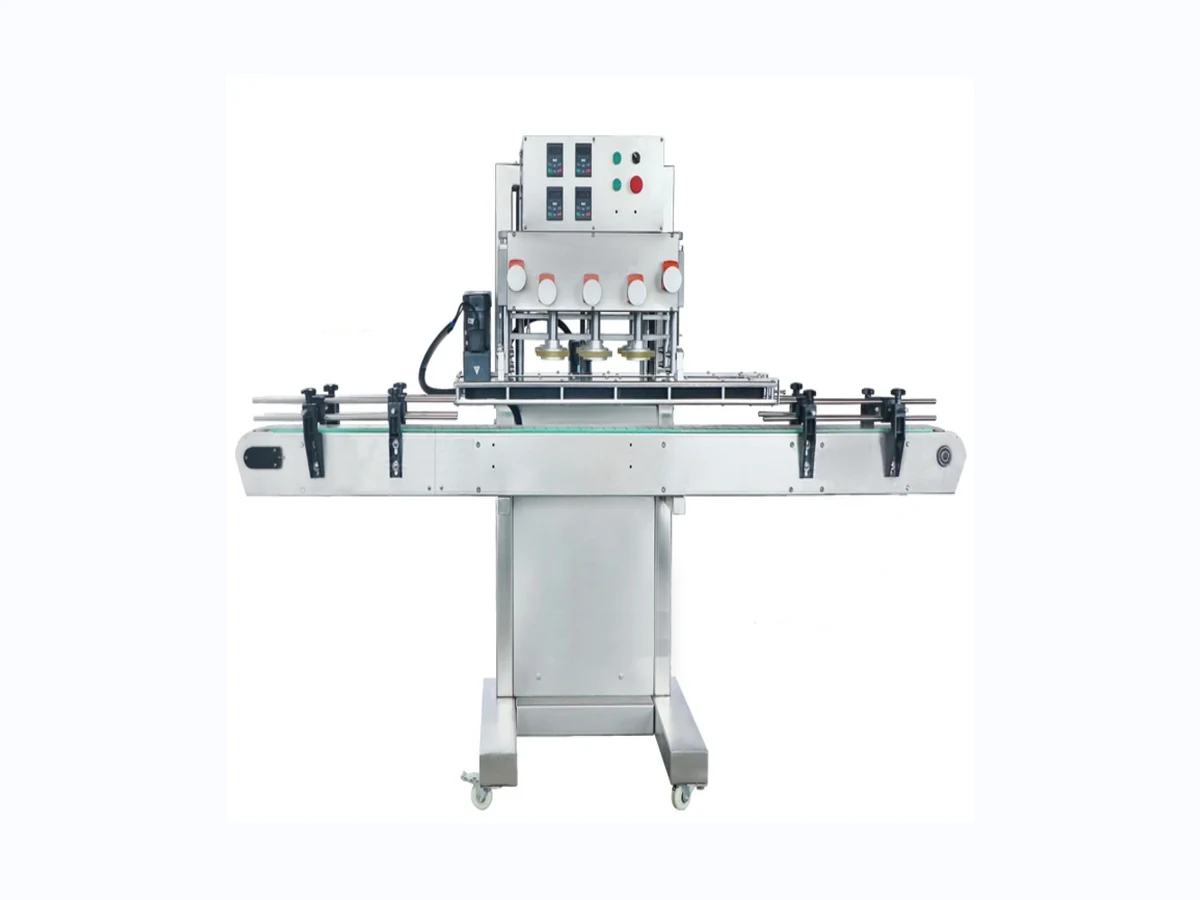
Bottles move through the tightening station continuously, reducing manual handling.

Inline cap tightening
Automatic cap tightening machines are used where production needs continuous handling rather than operator-led tightening. The correct route depends on cap feed, bottle stability, closure type, output and whether the capper connects with other line stages.
Project advice
Automatic cap tightening machines are used where production needs continuous handling rather than operator-led tightening. The correct route depends on cap feed, bottle stability, closure type, output and whether the capper connects with other line stages.
For a reliable recommendation, send bottle dimensions, cap samples, target output, photos of the line area and whether the machine must connect with filling, labelling, coding or conveyors.
Specification notes
The same closure can behave differently depending on bottle stability, thread quality, cap feed route, torque expectation and output target.
Bottles move through the tightening station continuously, reducing manual handling.
The cap route can be manual, elevator-fed, bowl-fed or project-specific.
The capper can be planned around upstream filling and downstream labelling or coding.
Related searches
These pages strengthen the route from broad capping-machine searches into more specific buying enquiries.
FAQ
Choose it when output and labour savings justify automatic handling rather than semi-automatic operation.
Not always, but cap feeding is normally considered where higher output or less operator handling is required.
Often yes, if space, bottle flow, conveyors and product handling are suitable.
Ready to shortlist?
Lancing UK will help identify the most suitable capping route and what needs to be checked before quotation.